
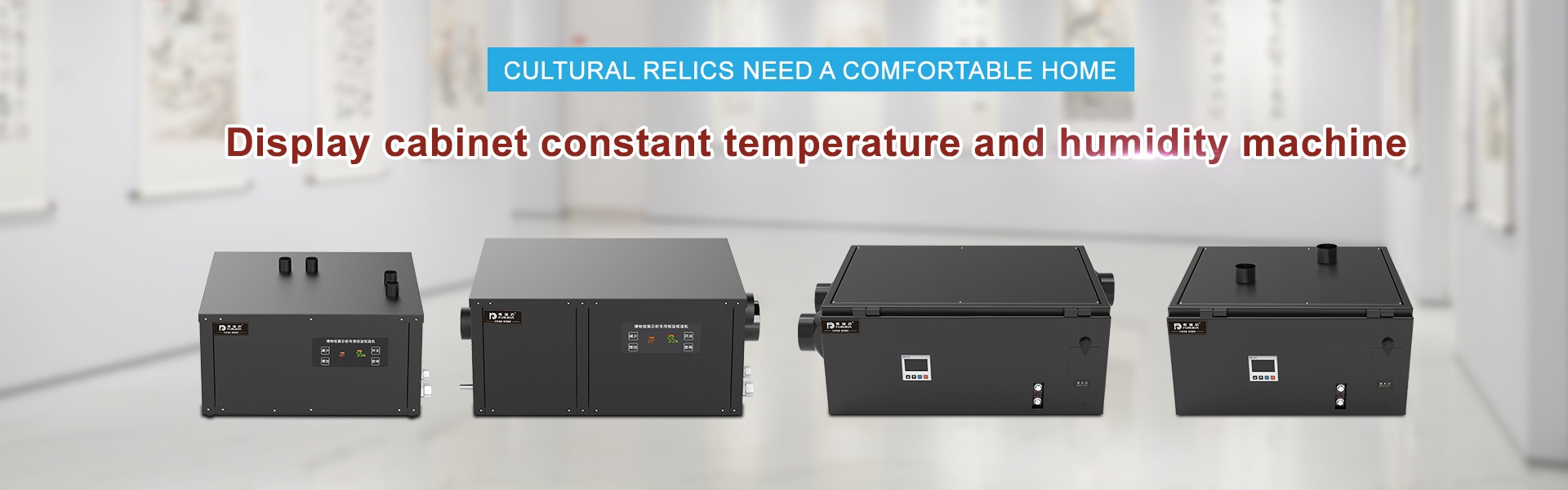

In modern protected agriculture, greenhouses create a relatively controlled growing environment for crops, but humidity management remains a technical challenge. Severe fluctuations in humidity not only affect crop physiology and metabolism but also trigger a series of diseases, directly threatening yield and quality. Constant humidity control units, however, act as meticulous “climate regulators.” By precisely controlling air moisture content, they ensure crop health while enhancing quality and optimizing energy utilization.
Humidity Fluctuations: The Hidden Catalyst for Disease
In enclosed or semi-enclosed greenhouse environments, humidity often fluctuates dramatically due to irrigation, transpiration, ventilation, and external weather conditions. At night or on overcast, rainy days, transpiration decreases but respiration continues, making it easy for moisture to condense on leaf surfaces; when temperatures rise during the day, the sudden change in vapor pressure difference can cause leaves to lose water too rapidly. This frequent alternation between dry and wet conditions severely weakens the crop’s cuticle defense mechanism, creating pathways for pathogen invasion.
Take gray mold and powdery mildew as examples; both are diseases triggered by high humidity. Gray mold thrives in environments with sustained high humidity (above 90% RH) and leaf surface condensation, with spore germination requiring only a few hours; while powdery mildew is more prevalent under moderate humidity, sudden fluctuations between dry and wet conditions accelerate the release and spread of conidia. For high-value crops such as flowers, seedlings, and medicinal plants, once a disease outbreak occurs, it not only damages appearance and reduces active ingredient content but may even result in a complete crop failure for the entire greenhouse.
Precision Coordination: The Core Mechanism of Humidifiers
Traditional dehumidification methods often rely on ventilation to reduce humidity, but ventilation in northern winters leads to significant heat loss, while ventilation in southern summers may introduce external moisture. The advantage of a constant humidity machine lies in its ability to operate independently of temperature control and ventilation systems, actively condensing and expelling water vapor to stabilize humidity while minimizing energy loss.
Truly efficient humidity management does not rely on the constant humidity machine acting alone, but rather on intelligent coordination with temperature control and ventilation systems. For example, when humidity in the greenhouse is too high, the humidity control unit is activated first to remove moisture through condensation, while the temperature is appropriately raised to increase the saturation gap, thereby avoiding the sudden temperature drop caused by direct ventilation. When temperatures are high and humidity is too low during midday, intermittent misting or cooling pads are used in conjunction with the humidity control unit to replenish residual moisture lost through evaporation, preventing the air from becoming too dry. The core of this coordinated control lies in the optimal humidity thresholds set for specific crop growth stages.
Taking orchids as an example, maintaining 70%–85% RH during the vegetative growth stage is ideal—within this range, stomatal opening is optimal, photosynthetic efficiency is high, and the germination of gray mold spores is effectively suppressed. If relative humidity remains above 90% for more than two hours, the humidity control unit automatically switches to high-power mode; when humidity drops below 75%, the system switches to a low-power maintenance mode to avoid energy waste caused by excessive dehumidification. For solanaceous crops or medicinal plants (such as Dendrobium officinale and Dendrobium nobile) during the seedling stage, relative humidity must be maintained at 80%–90% RH to promote root development; however, once the hardening-off stage begins, it must be gradually reduced to 65%–75% to enhance stress tolerance—this gradual transition also relies on the precise coordination of the humidity control unit with ventilation and heating systems.
Energy-Efficient Operation: Leveraging Nature and Strategy
As refrigeration-based dehumidification equipment, humidity control units consume electricity, making rational energy-saving strategies crucial. In practice, three key principles should be followed:
First, peak-offset scheduling and moisture buffering. Intensify dehumidification during off-peak electricity hours, utilizing the moisture buffering capacity of the greenhouse’s internal space and growing media to maintain humidity near the lower threshold; during peak hours, only intermittent supplemental operation is required to avoid frequent compressor start-stops.
Second, prioritize integration with natural sources. During the transitional seasons of spring and autumn, when the absolute humidity of the outside air is low, start by activating variable-frequency fans for displacement-based dehumidification. Once humidity approaches the target value, the humidity control unit can then fine-tune the settings, avoiding mechanical dehumidification throughout the entire process. For large multi-span greenhouses, set up independent humidity control zones—dehumidifying only areas exceeding the limit rather than adjusting the entire structure uniformly.
Third, implement adaptive setpoint adjustment. Dynamically adjust the target humidity based on the crop’s different growth stages and circadian rhythms. At night, when respiration is vigorous and transpiration is weak, the target value can be lowered by 5–10 percentage points to reduce unnecessary dehumidification load; during the flowering and fruit-setting periods, maintain strict stability to prevent fertilization disorders or flower and fruit drop caused by humidity fluctuations.
Improved quality is the ultimate answer
The impact of constant-humidity machines on crop quality does not directly “endow” crops with specific traits; rather, by eliminating humidity fluctuations—a form of environmental stress—they allow crops to fully express their genetic potential. Research shows that flowers grown in a stable humidity environment exhibit more uniform turgor pressure in their petals, enjoy a longer blooming period, and display more vibrant colors; a uniformly moist environment during the seedling stage significantly improves the robust seedling index and transplant survival rate; and the accumulation of secondary metabolites (such as alkaloids, flavonoids, and polysaccharides) in medicinal plants is often closely related to the avoidance of leggy growth and diseases caused by high humidity and low light.
It can be said that the value of a constant humidity controller lies not only in the act of “dehumidification” itself, but also in its synergy with other environmental control equipment to jointly create a smooth humidity curve that meets the physiological needs of crops. When every breath of air inside the greenhouse is precisely the right level of humidity—whether moist or dry—the reward for the crops is visibly uniform, plump, and healthy growth.
Growers who truly understand crops do not view humidity control units as emergency equipment, but rather as a long-term investment on par with temperature control and ventilation. Because within these compact greenhouses, the most costly factor is not the equipment itself, but the irreversible gap in quality that arises when a suitable humidity window is missed.
 vivienhu0427@hotmail.com
 +86 15958041362
 vivien@hzfreeair.com