Precision electronics manufacturing imposes nearly exacting requirements on the production environment. In SMT assembly workshops, the temperature must be strictly controlled at 24±2°C, and relative humidity must be maintained between 45% and 60% RH. This temperature and humidity range is not only the “golden parameter” for ensuring solder paste activity but also the lifeline for preventing electrostatic damage and soldering defects. However, with the arrival of summer each year, the hot and humid external climate becomes a Sword of Damocles hanging over electronics workshops—how to overcome this seasonal production challenge has become a core concern for many manufacturing companies.
I. The Dual Challenges of Summer: Excessive Humidity and Uncontrolled Temperature
The impact of summer on electronics production facilities is twofold. On the one hand, when workshop humidity is too high, solder paste absorbs excessive moisture, leading to quality issues such as bridging and cold solder joints during the reflow process. Even more insidious is the formation of a thin film of electrolyte on the surface of circuit boards or between component leads in high-humidity environments. Under the influence of an electric field, metal ions migrate along the direction of the field, forming dendritic conductive pathways (dendrites), which ultimately lead to short-circuit failures. Case studies show that at one factory, dehumidification equipment was not turned on during the summer, causing workshop humidity to soar to 85%. A batch of MSL3-rated BGAs was mounted without pre-baking, and 20% of them exhibited “popcorn cracking” after reflow soldering.
On the other hand, excessively high temperatures also pose a threat to production safety. Temperatures exceeding specified limits accelerate the volatilization of flux and solvents in solder paste, affecting its activity, while also causing changes in the thermal expansion coefficients of precision equipment such as placement machines, which in turn affects placement accuracy. When workshop temperatures exceed 26°C, some companies even need to halt production to cool the facility and ensure product quality. Temperature and humidity are not isolated variables—the cooling process is often accompanied by condensation, which, if not properly managed, can actually exacerbate localized humidity issues; conversely, dehumidification alone may cause the workshop temperature to drop below the process lower limit due to excessively cold air.
II. Working Principles and Application Limits of Refrigeration Dehumidifiers
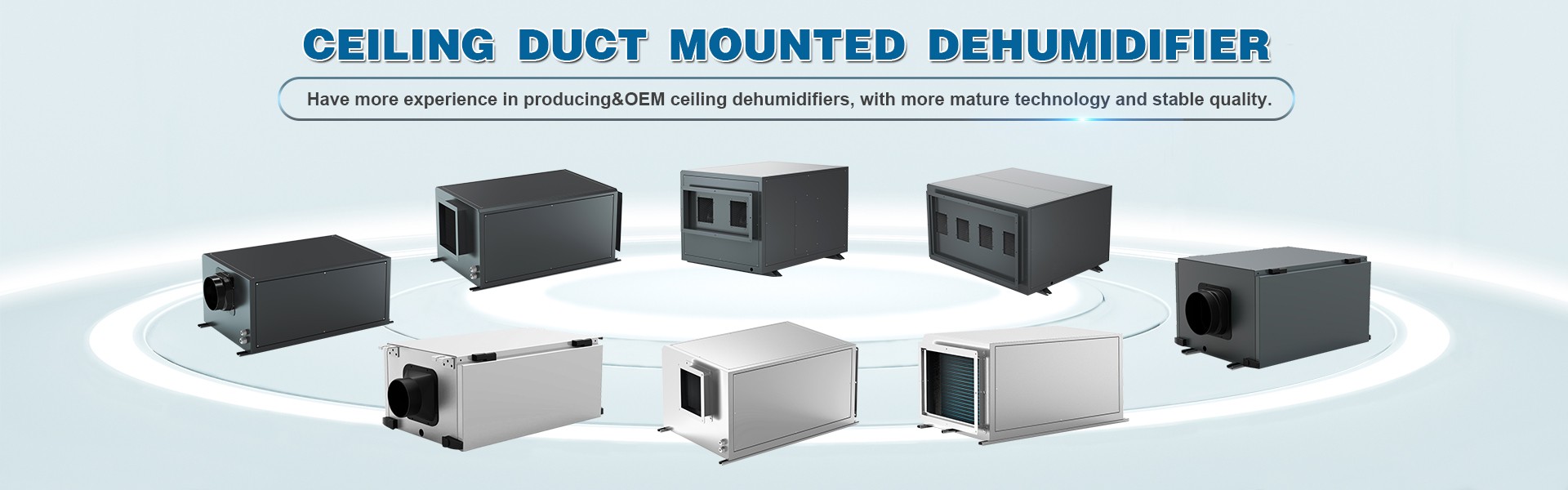
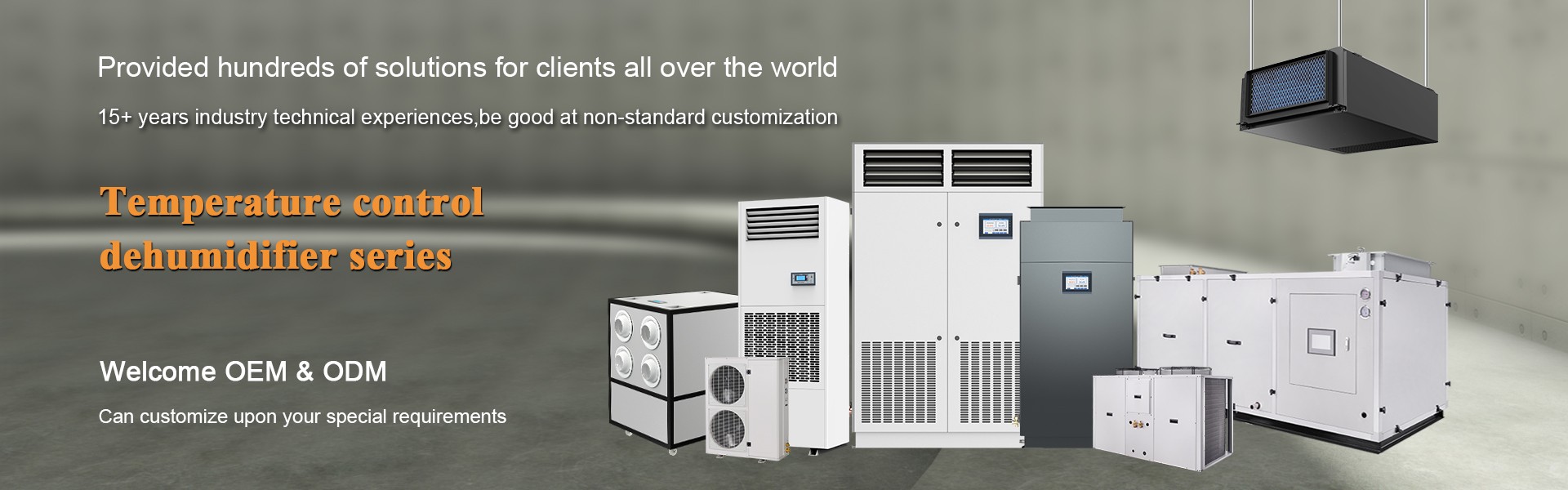
Faced with the challenges posed by the coupling of temperature and humidity, dehumidifiers with refrigeration capabilities (i.e., temperature-controlled dehumidifiers) offer an effective solution. The core of this technology lies in integrating refrigeration for cooling with refrigerant-based dehumidification within a single system. Refrigerant-based dehumidification is currently the most widely used technical approach; it essentially forces humid air to pass over an evaporator surface at a temperature below the dew point, causing water vapor to condense into liquid water, which is then collected and discharged. This method is most efficient when the ambient temperature is above 15°C and the relative humidity is above 60%, which precisely covers the high-temperature, high-humidity conditions typical of summer electronics manufacturing facilities.
Unlike conventional dehumidifiers, refrigeration dehumidifiers incorporate a dynamic balancing system that combines “refrigeration, dehumidification, and heating.” When the microelectronic control system detects, via high-precision sensors, that environmental parameters deviate from setpoints, the three subsystems work in concert. Take a typical summer scenario as an example: When hot and humid air at 35°C and 85% RH enters the workshop, the equipment activates the compressor to initiate the refrigeration cycle. The surface temperature of the evaporator is significantly lower than the air’s dew point, forcing moisture to condense and be removed; simultaneously, the system utilizes condensation heat recovery technology to reclaim and reuse the heat from the condenser (approximately 45–50°C), which would otherwise be discharged as waste heat. This mechanism of “dehumidifying while regulating temperature” effectively avoids the dilemmas found in traditional solutions, such as “sudden temperature drops caused by excessive dehumidification” or “prioritizing cooling while allowing humidity to skyrocket.”
III. Precision Control Strategies in Real-World Applications
In practical applications within electronics manufacturing facilities, deploying refrigeration dehumidifiers is not simply a matter of “turning them on and using them”; rather, it requires systematic strategies to support their operation.
Equipment selection is the first step. This selection must be based on actual operating conditions, with the required dehumidification capacity determined through scientific calculations. For example, consider an electronics production facility with a volume of 3,000 m³. When measured at 35°C and 85% RH, the current moisture content is approximately 30.2 g/kg. To achieve the target humidity of 42% RH—which corresponds to a moisture content of approximately 18.6 g/kg—the theoretically required minimum dehumidification capacity is about 50 kg/h. Therefore, a unit with a rated dehumidification capacity of ≥55 kg/h should be selected to allow for redundancy. At the same time, ensure the equipment’s protection rating is no lower than IP54 to withstand the dust, temperature, and humidity conditions typical of an electronics workshop.
The control strategy emphasizes “rapid reduction followed by gradual stabilization.” Dehumidification in high-humidity environments cannot be achieved in a single step but must follow a phased control approach. If the standard operating humidity requirement is 45% RH, the unit’s target value can first be set to 40% RH. By operating the compressor at full load in conjunction with high-speed airflow, the maximum moisture removal rate per unit time is achieved. Once the measured humidity has stabilized continuously within the target range, the setting is adjusted back to the standard value, and the unit switches to medium- or low-speed operation. This approach prevents frequent start-stop cycles caused by fluctuating humidity levels, thereby extending the compressor’s service life. Modern industrial models are generally equipped with high-precision humidity sensors and closed-loop feedback control systems, allowing for flexible setting of target humidity within the specified range. The equipment dynamically adjusts compressor speed, airflow, and start-stop logic based on real-time environmental data, maintaining spatial humidity within a fluctuation range of ±3%RH.
Equipment layout is equally critical. One company once crammed dehumidifiers into a corner of the production line; while test reports indicated that “dehumidification capacity met standards,” actual operation revealed localized condensation in the workshop. A smoke test later showed that the return air path was blocked by shelving, resulting in uneven airflow distribution. Therefore, an airflow organization assessment must be conducted before equipment deployment to ensure that air velocity effectively covers all dead zones in the workshop. Sensors should be placed in the areas of the workshop with the highest concentration of equipment to capture the most significant temperature and humidity fluctuations.
IV. From Reactive Response to Proactive Prevention and Control
High summer temperatures and humidity are not insurmountable obstacles. By deploying refrigeration dehumidifiers with temperature control capabilities, electronics workshops can maintain temperatures at 24±2°C and humidity levels between 45% and 60% RH—meeting process requirements—even during the seasons when external weather conditions are at their most extreme. More importantly, modern refrigeration dehumidifiers have overcome the limitations of standalone operation and can now integrate with a factory’s MES or energy management system to enable remote monitoring and intelligent scheduling. When filter pressure differentials exceed limits or refrigerant pressure becomes abnormal, the system can instantly send alerts and generate maintenance work orders.
From a humidity alarm at 3:00 a.m. to a stable production environment year-round—refrigeration dehumidifiers are evolving from “emergency equipment” into indispensable “environmental infrastructure” for electronics manufacturing facilities. For precision electronics manufacturing, maintaining strict control over temperature and humidity is the lifeline for product yield and brand reputation.
 vivienhu0427@hotmail.com
 +86 15958041362
 vivien@hzfreeair.com