
In the field of museum artifact conservation, the stable control of environmental temperature and humidity is a key measure for extending the lifespan of artifacts and slowing down the deterioration process. To address this need, two mainstream technical approaches have emerged: first, “localized micro-environment control” for individual display cases housing precious artifacts; and second, “whole-museum climate control” covering the entire venue. Each strategy has its own physical rationale and economic considerations, making them suitable for different scenarios and requirements.
Localized Micro-environment Control: Precise Protection of Core Collections
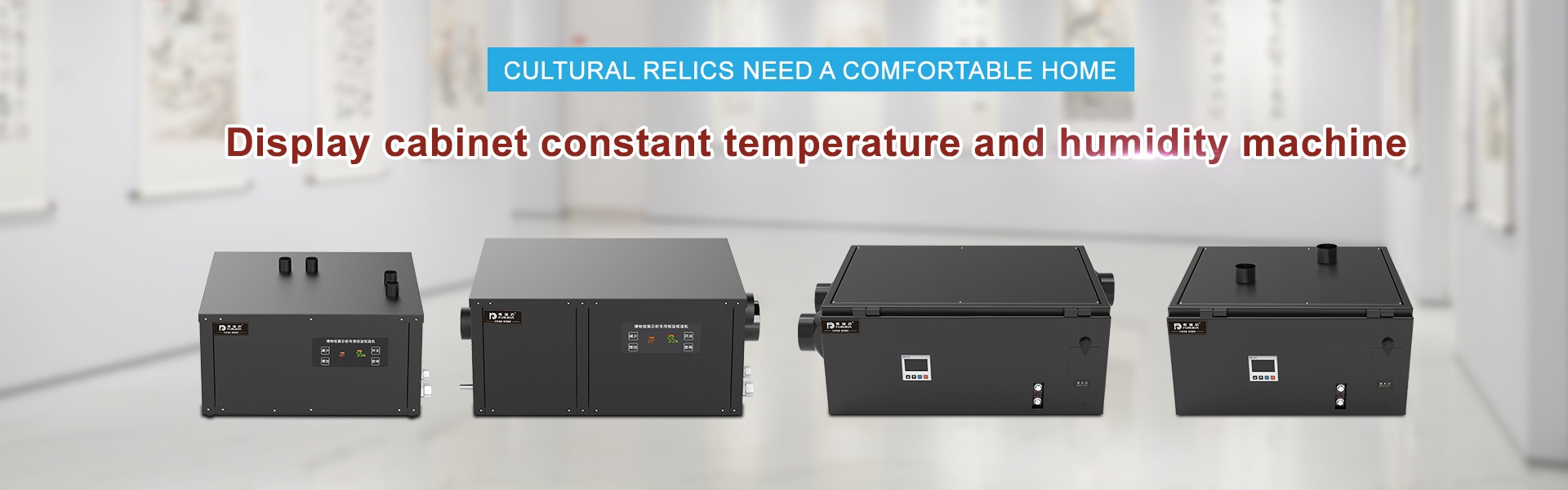
The core concept of localized micro-environment control is to concentrate control resources on the few display or storage cabinets that require the most protection. Each compact climate control unit independently serves one or several enclosed cabinets, forming a self-contained microclimate unit.
The advantages of this approach are significant. First, it is precise and efficient: due to the small controlled space and high level of enclosure, the system can rapidly respond to subtle fluctuations in temperature and humidity within the cabinet, stabilizing environmental parameters within an extremely narrow set range. This is particularly suitable for organic or metallic artifacts that are highly sensitive to humidity changes. Second, energy consumption is extremely low: compared to maintaining constant temperature and humidity throughout an entire hall, the energy required to maintain the environment within a single cubic meter of cabinet space is only a fraction of the latter. Furthermore, the equipment offers flexible deployment and can be adjusted according to the gallery layout; even if a single unit fails, it will not affect other display cases, ensuring high system redundancy.
However, localized control also has its limitations. On the one hand, with equipment distributed across multiple locations, the workload for inspections and maintenance increases significantly when the number of units is high, as each unit requires regular checks of the water supply, filters, and refrigeration systems. On the other hand, the sealing performance of the display cases themselves is critical. If the cases are not sufficiently airtight and external air frequently infiltrates, the mini-units will operate under high loads for extended periods, which can actually compromise their lifespan and stability. Furthermore, although the units themselves are compact, adequate installation space and air inlets/outlets must still be properly arranged next to the delicate display cases.
Whole-Gallery Centralized Control: Grand Scale and High Cost
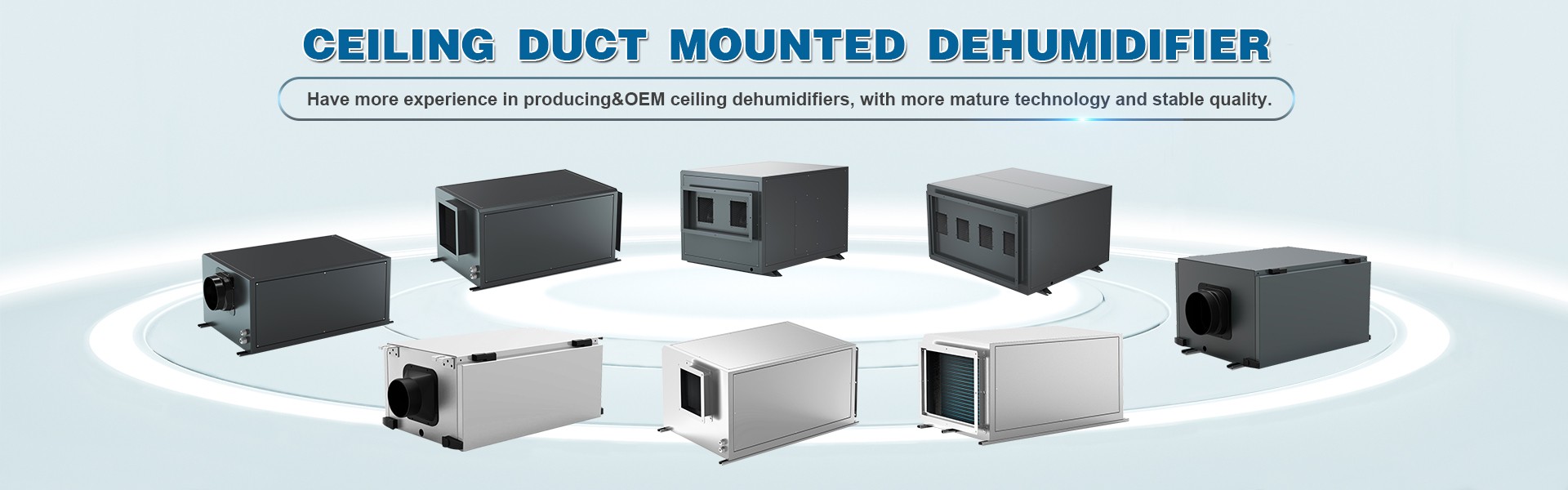
In contrast, whole-gallery centralized control employs a central air conditioning system paired with centralized constant temperature and humidity units to manage the environment uniformly across the entire exhibition hall, storage areas, and even entire floors. Air is centrally treated, delivered to each zone via ductwork, and then recirculated and re-adjusted, forming a complete cycle.
The greatest advantage of this strategy lies in environmental uniformity and the imperceptibility of the system. Both visitors and staff experience a comfortable and stable environment throughout the space without the need for additional equipment near display cases. For large exhibition halls or gallery-style spaces, a centralized system prevents the visual disruption caused by an excessive number of local units. From a management perspective, with equipment concentrated in a mechanical room, inspections and maintenance are streamlined, requiring focused upkeep on only a limited number of main units.
However, the costs of centralized control across the entire facility are equally significant. Investment costs are high: the construction expenses for large-scale constant temperature and humidity units, ductwork systems, insulation upgrades, and automated control systems are often tens or even hundreds of times higher than those of localized solutions. Operating costs represent an ongoing and heavy burden—maintaining temperature and humidity throughout the entire hall requires handling massive air volumes and managing the thermal and humidity loads from walls, glass, and people, resulting in consistently high electricity and maintenance costs year-round. Furthermore, the system responds slowly; it takes several hours or even longer after startup to stabilize the large space at target parameters, making it extremely impractical for temporary shutdowns and restarts. Should the main unit malfunction or require annual maintenance, the entire exhibition hall may face a loss of environmental control.
How to Choose and Combine Approaches
Faced with these two options, museums should make decisions based on a comprehensive assessment of collection value, building conditions, exhibition requirements, and budget constraints.
For National First-Class Cultural Relics, particularly precious organic artifacts, or items known to be highly sensitive to environmental conditions, localized microclimate control is the safer choice. Even if the entire museum is equipped with central air conditioning, it is still recommended to install independent climate control systems within these core display cases to provide “dual protection.” Conversely, for galleries primarily featuring artifacts with relatively high weather resistance—such as ceramics, stone artifacts, and metals—a unified, museum-wide control system can provide a clean and cohesive exhibition experience, provided the building envelope is sound and the budget is sufficient.
Building conditions often serve as the decisive factor. In older buildings or historically protected structures where large-scale ductwork retrofits or wall insulation upgrades are not feasible, localized microclimate control is nearly the only viable solution. Newly constructed museums should incorporate centralized systems into their designs during the planning phase, while also reserving connections for micro-environment equipment within display cases in key exhibition areas.
Currently, an increasing number of museums are adopting a hybrid strategy: a large-scale constant temperature and humidity system maintains a relatively broad baseline range throughout the museum (e.g., temperature 18–22°C, humidity 45–55%) to ensure visitor comfort and the basic safety of general artifacts; while deploying small, high-precision climate control units within individual display cases housing sensitive artifacts such as precious calligraphy and paintings, lacquerware, and murals, to maintain parameters within stricter ranges (e.g., temperature 20±1°C, humidity 50±2%). This tiered control approach balances overall environmental stability with the extreme requirements of key artifacts, achieving an optimal equilibrium between investment, operating costs, and conservation effectiveness.
Conclusion
Localized micro-environment control and museum-wide centralized regulation are not mutually exclusive opposites, but rather two distinct tools in the museum’s environmental management toolkit. The former involves meticulous, cost-effective management and is suitable for precise, localized protection; the latter offers comprehensive, unified coordination and is suitable for overall, area-wide safeguards. A scientific strategy is not a choice between one or the other, but rather finding the most reasonable proportion and boundaries between the two based on specific conditions and conservation objectives. Only by precisely directing limited resources toward the objects most in need of protection can we truly fulfill the original intent and mission of cultural heritage conservation.
 vivienhu0427@hotmail.com
 +86 15958041362
 vivien@hzfreeair.com