I. Critical Requirements of the Setting: From “Irreversible Damage” to the “Environmental Intervention Window”
In the cultural heritage preservation process, the moment of excavation and the transportation phase are high-risk periods during which environmental parameters are beyond control. Archaeological excavation sites are often characterized by extreme daily fluctuations in temperature and humidity, dust, and active microbial colonies. For newly excavated organic artifacts (such as lacquerware and textiles) or inorganic artifacts at extremely high risk of salt efflorescence (such as fragile bronze objects and painted terracotta figurines), moisture content and internal stress can undergo drastic changes within a matter of hours. At such times, fixed air conditioning systems—constrained by electrical capacity, installation space, and fresh air handling capabilities—are virtually impossible to deploy immediately alongside excavation pits.
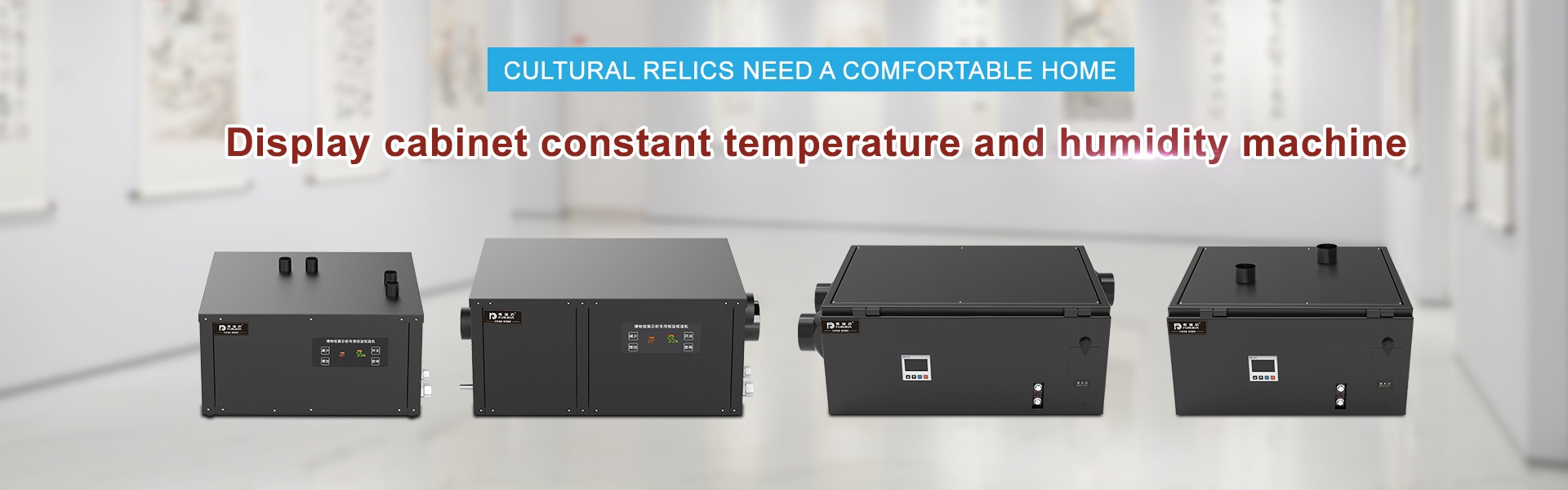
Similarly, in traveling exhibitions, the basic environmental conditions of exhibition halls vary significantly across museums of different grades. If standalone display cases rely solely on the air conditioning systems of large exhibition spaces, they often face humidity fluctuations caused by airflow dead zones or energy-saving shutdowns during nighttime hours. Portable micro-units can be embedded in the base of display cases or concealed in side panels, creating a dedicated “microclimate fortress” for individual highly sensitive artifacts (such as ancient calligraphy and paintings, or ivory carvings), allowing different display cases within the same exhibition hall to maintain distinct temperature and humidity settings simultaneously.
II. Selection Decision Matrix: Calibrated by Risk Level and Operation Duration
Appropriate selection does not mean pursuing the highest technical specifications, but rather achieving a balance between “environmental risk” and “equipment cost.” It is recommended to construct an evaluation framework based on two key dimensions:
Dimension 1: Urgency and Duration of Operations
For the initial phase of emergency excavations (<72 hours), a simple split-system combination of a single-cooling dehumidifier and a standalone electric humidifier is recommended. This solution is cost-effective and quick to deploy, with temperature control accuracy relaxed to ±2°C.
For the meticulous cleaning phase lasting several weeks (e.g., silk artifact extraction), an integrated precision constant-temperature and constant-humidity unit equipped with data logging capabilities should be selected to trace the correlation between environmental fluctuations and changes in the condition of cultural relics.
For interprovincial touring exhibitions (duration > 3 months), remote monitoring modules must be included in the equipment selection criteria to enable the headquarters’ environmental monitoring center to access real-time parameters inside the display cases.
Dimension 2: Spatial Constraints and Condensation Heat Dissipation Pathways
At archaeological sites, units are typically permitted to discharge heat through openings in the side walls of outdoor tents, but there are no strict requirements for cooling energy efficiency. In contrast, the space for heat dissipation in standalone display cases within exhibition halls is extremely limited. If the airflow organization design on the condenser side is overlooked during selection, heat accumulation generated during equipment operation may cause condensation on the inner walls of the display case glass or raise the temperature of the surrounding microenvironment. In such cases, priority should be given to models capable of switching between air-cooled and auxiliary water-cooled modes, or those equipped with an external heat-discharge duct kit to direct hot air into the return air cavity in the exhibition hall’s ceiling.
III. Conclusion: From “Temporary Measures” to a “Standardized Emergency Response System”
The essence of portable constant-temperature and constant-humidity equipment lies in breaking down the “environmental immune system” of large museums into deployable tactical units. It does not aim for the same extreme precision as fixed systems but instead prioritizes rapid response, flexible deployment, and fault-tolerant operation and maintenance as its core lifelines. Future trends will place greater emphasis on the intelligence of the equipment itself—such as algorithms that automatically generate temperature and humidity transition curves based on the materials of excavated artifacts, or vibration sensors that adjust compressor speed to avoid resonance frequencies.
For conservation professionals, the ultimate basis for selection should not be limited to data tables in product manuals, but rather a precise assessment of “where and when cultural relics are most vulnerable.” Only when the equipment becomes a physical extension of emergency response strategies—rather than an isolated stack of technologies—can mobile constant-temperature and constant-humidity systems truly make the cognitive leap from “temporary stopgap” to “professional protection.” Every successful on-site intervention represents an effective safeguard for non-renewable cultural heritage assets—and this is precisely where the unique value of this type of equipment lies.
 vivienhu0427@hotmail.com
 +86 15958041362
 vivien@hzfreeair.com